Commodities Update April 2026
Commodity markets experienced mixed trends in March amid the Gulf of Arabia conflict, with crude oil volatile but ending the month where it started, LNG rising sharply, and metals showing varied performance. The report anticipates significant impacts on prices and supply through 2026 and beyond due to ongoing geopolitical tensions.
The following is based on text from the April Market Outlook (PDF 3MB)
For more details of our longer-term forecasts see April Commodity Forecasts
Commodities had a mixed March as the conflict in the Gulf of Arabia unfolded. Our overall index is down 2.5% since our March report. Crude oil retraced to around US$94/bbl, broadly unchanged over the month, while Asian LNG rose a further 9%. Aluminium and metallurgical coal gained 4% and 5%, respectively. In contrast, gold fell 7%, while iron ore was flat at US$107/t. Since the last report, we have shifted to a more severe conflict scenario, assuming a two‑month blockage of the Strait of Hormuz. Under this assumption, we now expect Brent to average US$105/bbl in the June quarter, before easing back to around US$80/bbl by year end.
Oil prices eases but risks skewed to upside
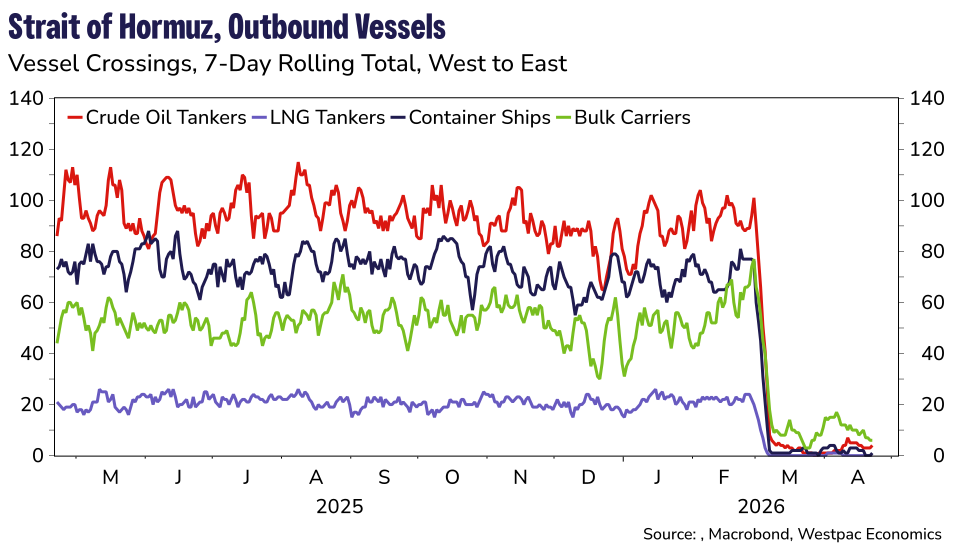
A fragile ceasefire in the Middle East has reduced immediate escalation risks but uncertainty remains high. While there have been steps towards a renewed US–Iran dialogue, progress has been tentative and limited to date. Intermittent vessel transits through the Strait of Hormuz fall well short of restoring the roughly 20mbpd of crude flows that existed pre‑conflict. Supply conditions remain tight due to production shut‑ins, infrastructure damage and ongoing shipping dislocation, with many vessels continuing to avoid the Strait, creating persistent logistical backlogs. Although global inventories (~8.4bn barrels) provide some buffer, draws outside the Gulf, around 200mb in March, highlight growing downstream stress.
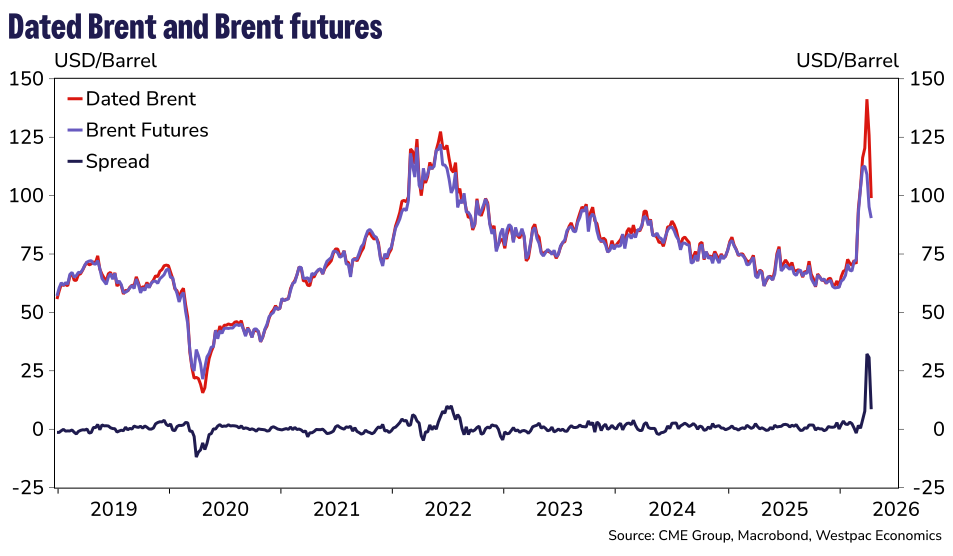
Our baseline assumes the Strait remains largely closed through April, followed by only partial reopening. We expect throughput to recover to around 20% of normal capacity by May, with flows normalising towards end‑2026 as security and insurance risks linger. Brent prices are now expected to average around US$105/bbl in Q2 2026, around 33% above our March forecast, before easing as geopolitical risks unwind and high prices drive demand destruction. Dated Brent briefly reached US$145/bbl in early April and our economic modelling places greater weight on this physical crude price rather than financial market pricing. As such, we have trimmed our Q2 estimates to be more in line with financial market pricing, and instead capture more of the economic impact of tighter conditions through wider refining margins, particularly for diesel and jet fuel. Brent is forecast to ease to US$80/bbl by Q4 2026, with further moderation through early 2028 as supply and shipping conditions normalise.
LNG supply constraints boosting Asian prices
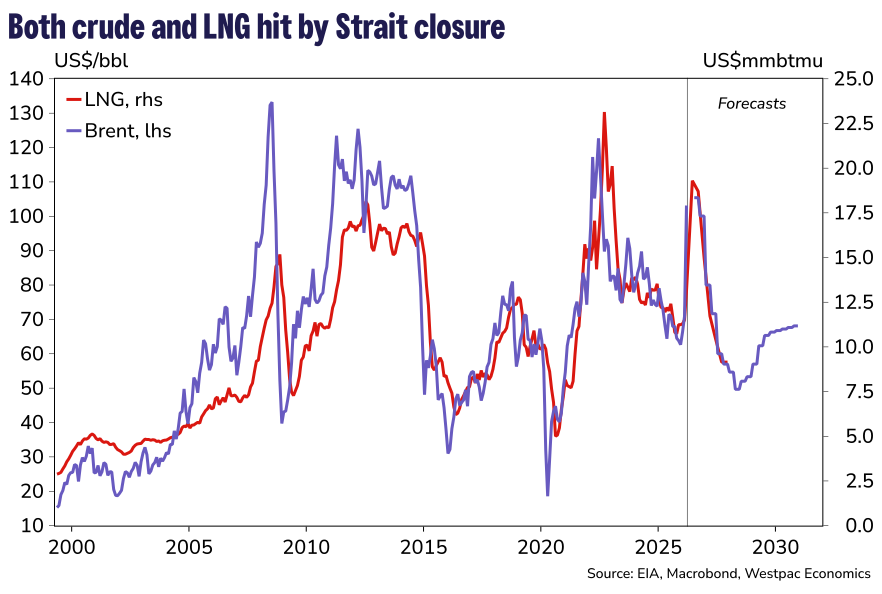
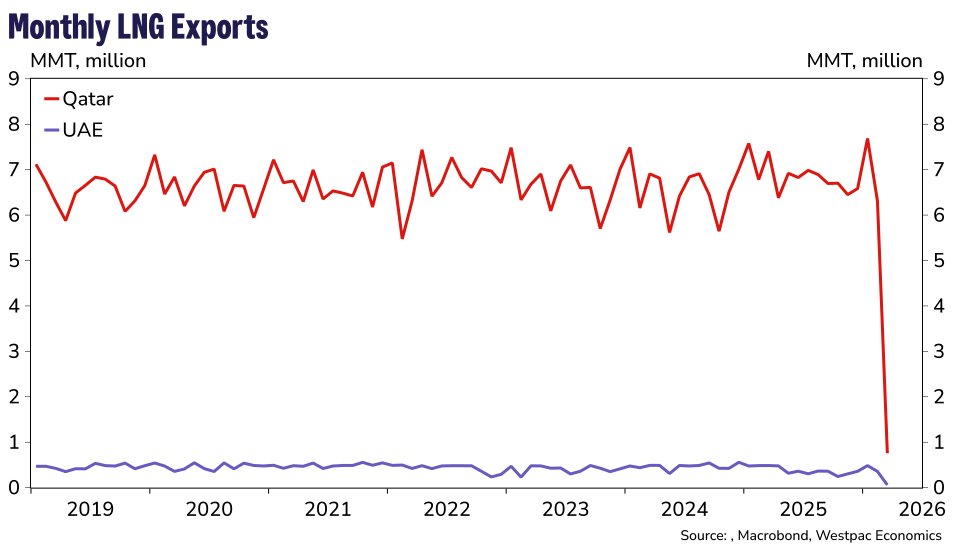
LNG markets remain acutely exposed to the conflict, with an estimated 300mcm/day - around one‑fifth of global supply - lost from Qatar and the UAE. Ras Laffan in Qatar, the world’s largest LNG export complex, has been offline since early March, while global storage levels were already depleted coming out of the Northern Hemisphere heating season. Asia is particularly vulnerable, with an estimated 80–90% of LNG volumes transiting the Strait of Hormuz destined for Asian markets, driving sharp increases in Japanese LNG prices. We continue to expect Japanese LNG prices to peak around US$24/mmbtu in the September quarter and while prices remain elevated into the December quarter they are expected to ease back to just above US$20/mmbtu. Given the scale of infrastructure damage and the lack of viable alternative export routes, LNG prices are not expected to return to the pre-conflict level until mid-2027.
Iron ore: support now, surplus ahead
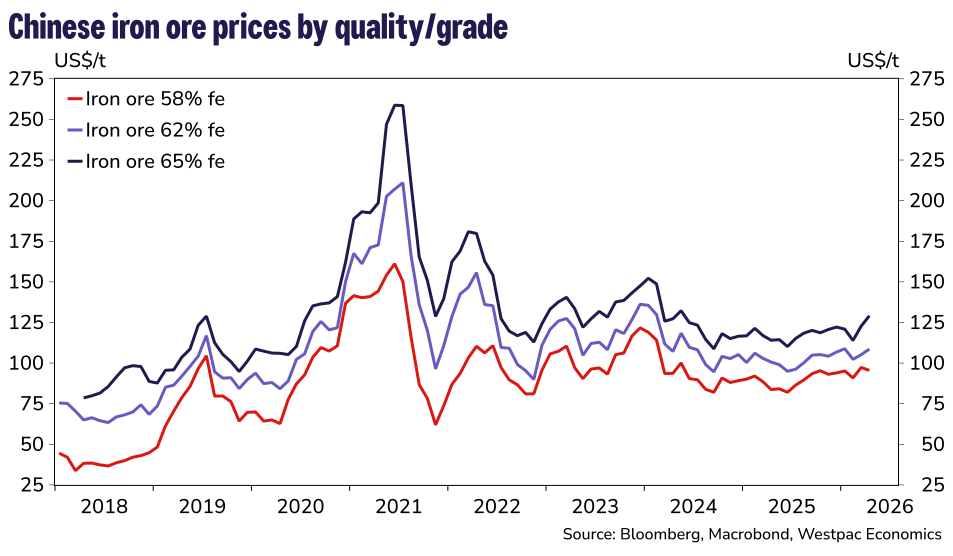
Iron ore continues to find near term support from higher freight and operating costs related to the energy shock, with freight accounting for an estimated 15–30% of delivered costs. It has also been supported by resilient steel output in China. The medium‑term outlook is increasingly challenged, however, with surplus conditions expected to emerge. Supply side pressures are building, led by new low‑cost supply from Simandou and historically high iron ore inventories at Chinese ports.
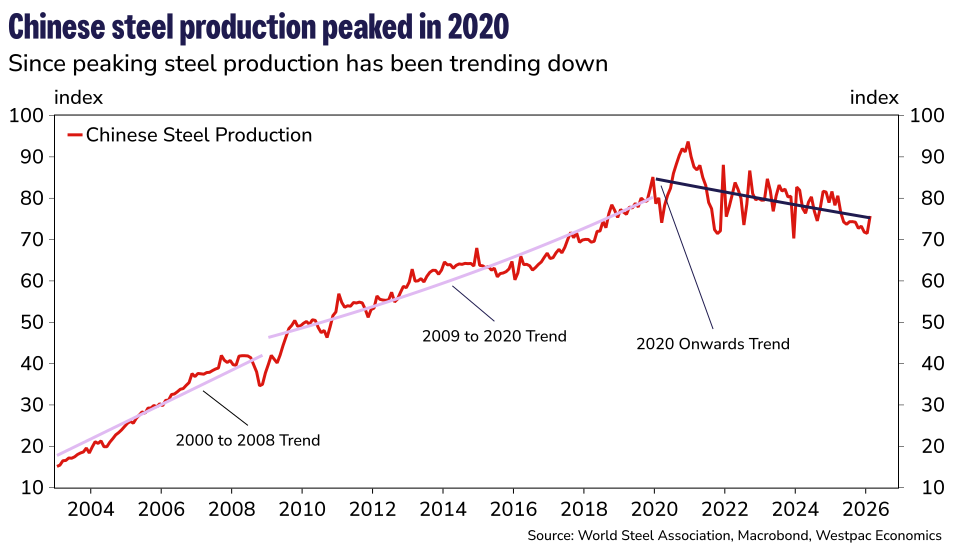
At the same time, global steel demand is softening as major economies face energy-related cost pressures. Increased use of steel scrap and a structural decline in Chinese steel production continue to erode underlying demand, with growth in India and South‑East Asia providing only a partial offset.
Adding to the downside risk, a resolution of industrial tensions between China Mineral Resources Group and BHP has also removed a source of temporary support. Together, these dynamics point to rising downside risk over the medium term so we continue to expect the 62%fe index to soften, averaging around US$101/t in the June quarter, before declining further to approximately US$84/t by December.
Gold consolidating before a push
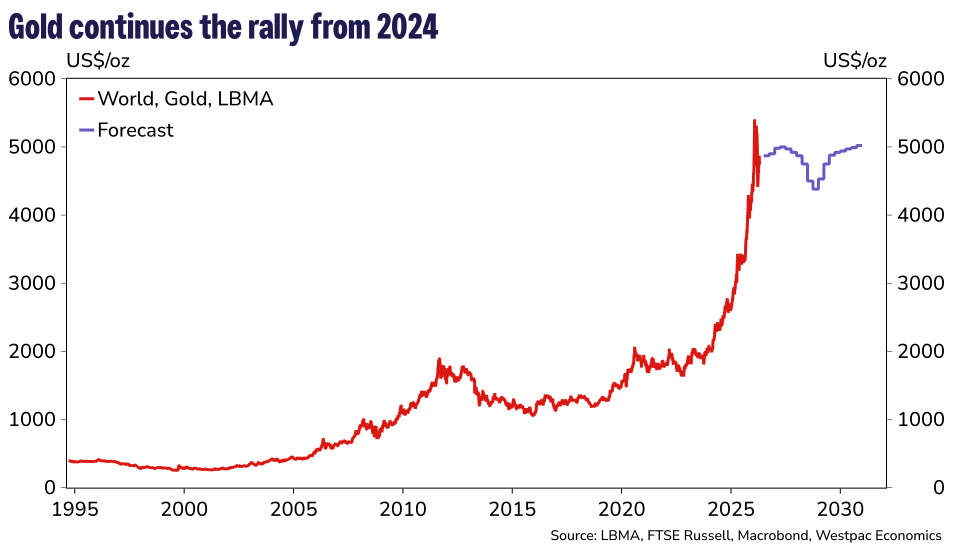
Gold has been under pressure in recent weeks as markets focused on the inflationary impact of higher oil prices and the prospect that central banks may keep policy tighter for longer. A rapid rise in US real yields alongside renewed USD strength has weighed on bullion, prompting a notable retracement from the all-time high reached in late January.
We expect consolidation to persist over coming weeks. Gold has already corrected materially, and speculative positioning has been flushed out. A period of range trading, with easing volatility, should allow a base to form and encourage longer‑term investors to gradually rebuild positions.
Geopolitical risks tend to have an uneven and often short lived impact on gold, with near term safe haven rallies typically fading as markets adjust. More durable support usually comes through second round effects, including shifts in the growth inflation mix, policy responses and strengthening strategic demand as investors diversify. If geopolitical disruptions persist and energy prices remain elevated, the combination of higher inflation and weaker growth, alongside the risk of renewed fiscal and monetary stimulus, would present upside risks for gold. Persistent geopolitical uncertainty also underpins overall demand.
Concerns about central bank selling resurfaced following recent price weakness and headlines around Turkey. While some central banks may sell modest amounts at times, there is little evidence of a structural shift away from gold. We continue to expect official sector net purchases to be broadly in line with recent trends.
Headline risks remain as markets re‑price geopolitical and macro developments. Nevertheless, positioning is cleaner, long term investors remain under invested, and diversification demand is rising so we expect to see a new high in gold.
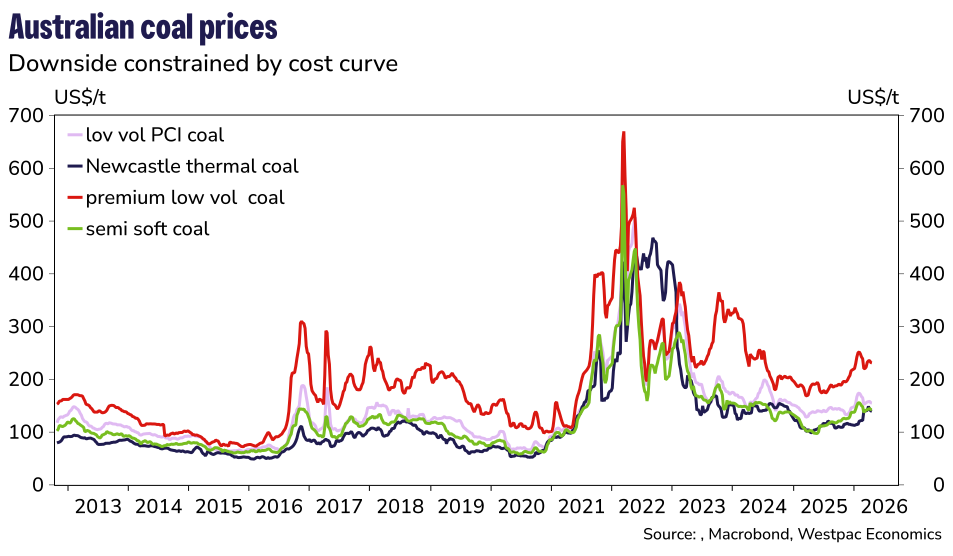
The Gulf conflict lifts near-term aluminium and thermal coal
After oil and gas, thermal coal and aluminium are the commodities most directly affected by the Gulf of Arabia conflict. Thermal coal prices are being boosted by potential gas-to-coal switching for power generation. Aluminium prices are being supported by supply disruptions in Gulf production and higher energy costs. Uncertainty remains over how long the conflict will last and, critically, whether the Strait of Hormuz stays closed to shipping. Under our base case, a higher energy risk premium is likely to persist in the near term, supporting both coal and aluminium prices.
Thermal coal being supported by the shortage of gas in Asia
We have lifted our 2026 thermal coal price forecast to US$125/t, with prices peaking at US$145/t in the June quarter. Since the Iran conflict started on 28-Feb, European gas is up close to 50% and Brent is up around 30%, while thermal coal has risen about 15%. Our current scenario has Brent at US$105/bbl in the June quarter. However, the dated/delivered price for physical crude is likely to remain meaningfully above futures. These higher physical prices will continue to flow through to LNG and thermal coal. Based on current spot gas prices in Europe and Asia, the implied thermal coal price would be more than US$250/t.
While we do not expect widespread short-term gas-to-coal switching, higher gas prices should still support thermal coal prices. If energy prices remain elevated for a more protracted period, that would also be supportive of higher thermal coal demand. Material production curtailments in Indonesia would be a further upside risk, although this appears unlikely at this stage. Over the medium to longer term, we continue to expect a structural shift away from thermal coal, with declining demand and prices easing back towards US$120/t by end-2027.
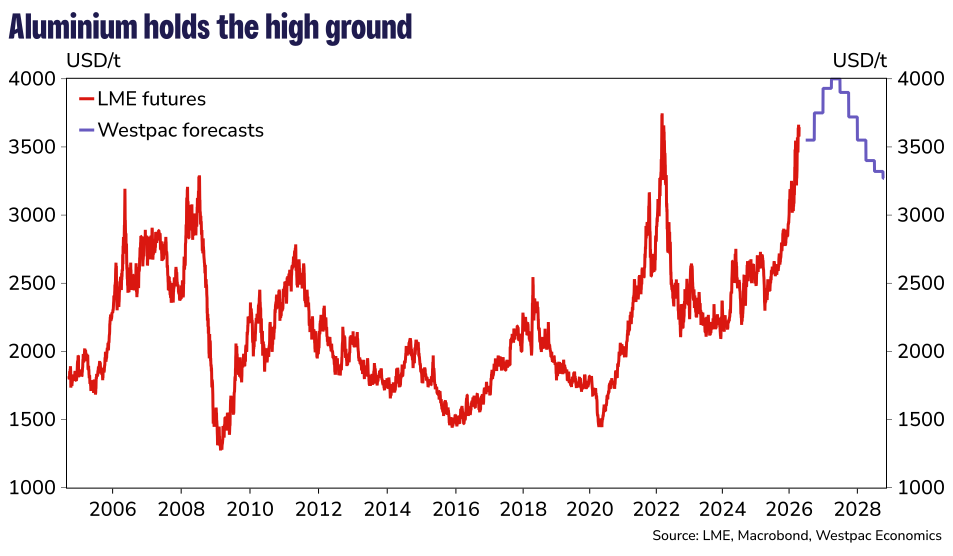
Aluminium supply squeezed by Gulf disruptions
Aluminium markets are facing mounting supply pressures from elevated energy input costs and disruptions to Gulf-based smelting capacity. Often described as ‘solid electricity’, aluminium production is highly energy-intensive, with higher power prices feeding directly into marginal production costs. Compounding this, the Gulf region accounts for around 9% of global smelting capacity, much of which is geographically constrained within the Arabian Gulf. In addition to logistical disruption, physical damage to smelting facilities in Qatar and Bahrain has resulted in outright supply losses, while the time and capital-intensive nature of smelter restarts limits the scope for a rapid recovery in capacity. Against this backdrop, we expect aluminium prices to spike in the March quarter of 2027, averaging US$4,000/t, before moderating as supply conditions gradually stabilise.
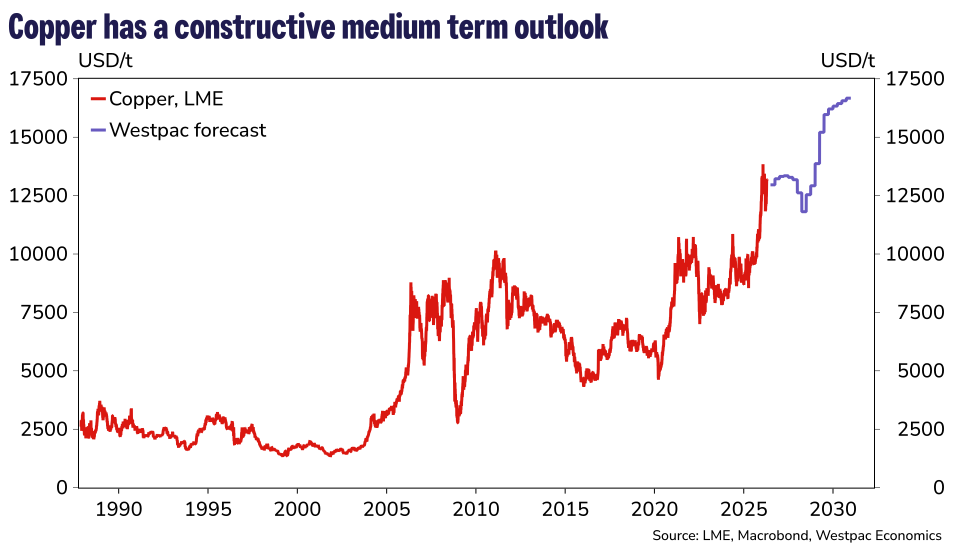
Copper demand electrified
Copper prices strengthened on growing optimism that the Middle East conflict may be approaching an end, alongside renewed momentum behind global electrification trends. At the same time, global copper inventories have tightened, with COMEX data pointing to ongoing drawdowns through March and into April. Part of this tightening is likely linked to sulphur shortages, with around one-third of global sulphur supply sourced from the Gulf, and China at the same time curtailing sulphuric acid exports. Given sulphuric acid’s critical role in copper production, particularly in Chile, Peru and the Democratic Republic of the Congo, these constraints are weighing on refined supply. As a result, copper prices have returned above US$13,000/t, with a local peak expected in the March quarter of 2027 averaging US$13,350/t, before further gains later in the forecast period as net‑zero targets approach and data‑centre build‑outs accelerate.
Stay informed with Westpac IQ
Get the latest reports straight to your inbox.
Related articles
Commodities Update October 2026
Commodities Update September 2026
Commodities Update August 2026
Browse topics
Disclaimer
©2026 Westpac Banking Corporation ABN 33 007 457 141 (including where acting under any of its Westpac, St George, Bank of Melbourne or BankSA brands, collectively, “Westpac”). References to the “Westpac Group” are to Westpac and its subsidiaries and includes the directors, employees and representatives of Westpac and its subsidiaries.
Things you should know
We respect your privacy: You can view the New Zealand Privacy Policy here, or the Australian Group Privacy Statement here. Each time someone visits our site, data is captured so that we can accurately evaluate the quality of our content and make improvements for you. We may at times use technology to capture data about you to help us to better understand you and your needs, including potentially for the purposes of assessing your individual reading habits and interests to allow us to provide suggestions regarding other reading material which may be suitable for you.
This information, unless specifically indicated otherwise, is under copyright of the Westpac Group. None of the material, nor its contents, nor any copy of it, may be altered in any way, transmitted to, copied of distributed to any other party without the prior written permission of the Westpac Group.
Disclaimer
This information has been prepared by Westpac and is intended for information purposes only. It is not intended to reflect any recommendation or financial advice and investment decisions should not be based on it. This information does not constitute an offer, a solicitation of an offer, or an inducement to subscribe for, purchase or sell any financial instrument or to enter into a legally binding contract. To the extent that this information contains any general advice, it has been prepared without taking into account your objectives, financial situation or needs and before acting on it you should consider the appropriateness of the advice. Certain types of transactions, including those involving futures, options and high yield securities give rise to substantial risk and are not suitable for all investors. We recommend that you seek your own independent legal or financial advice before proceeding with any investment decision.
This information may contain material provided by third parties. While such material is published with the necessary permission none of Westpac or its related entities accepts any responsibility for the accuracy or completeness of any such material. Although we have made every effort to ensure this information is free from error, none of Westpac or its related entities warrants the accuracy, adequacy or completeness of this information, or otherwise endorses it in any way. Except where contrary to law, Westpac Group intend by this notice to exclude liability for this information. This information is subject to change without notice and none of Westpac or its related entities is under any obligation to update this information or correct any inaccuracy which may become apparent at a later date. This information may contain or incorporate by reference forward-looking statements. The words “believe”, “anticipate”, “expect”, “intend”, “plan”, “predict”, “continue”, “assume”, “positioned”, “may”, “will”, “should”, “shall”, “risk” and other similar expressions that are predictions of or indicate future events and future trends identify forward-looking statements. These forward-looking statements include all matters that are not historical facts. Past performance is not a reliable indicator of future performance, nor are forecasts of future performance. Whilst every effort has been taken to ensure that the assumptions on which any forecasts are based are reasonable, the forecasts may be affected by incorrect assumptions or by known or unknown risks and uncertainties. The ultimate outcomes may differ substantially from any forecasts.
Conflicts of Interest: In the normal course of offering banking products and services to its clients, the Westpac Group may act in several capacities (including issuer, market maker, underwriter, distributor, swap counterparty and calculation agent) simultaneously with respect to a financial instrument, giving rise to potential conflicts of interest which may impact the performance of a financial instrument. The Westpac Group may at any time transact or hold a position (including hedging and trading positions) for its own account or the account of a client in any financial instrument which may impact the performance of that financial instrument.
Author(s) disclaimer and declaration: The author(s) confirms that (a) no part of his/her compensation was, is, or will be, directly or indirectly, related to any views or (if applicable) recommendations expressed in this material; (b) this material accurately reflects his/her personal views about the financial products, companies or issuers (if applicable) and is based on sources reasonably believed to be reliable and accurate; (c) to the best of the author’s knowledge, they are not in receipt of inside information and this material does not contain inside information; and (d) no other part of the Westpac Group has made any attempt to influence this material.
Further important information regarding sustainability-related content: This material may contain statements relating to environmental, social and governance (ESG) topics. These are subject to known and unknown risks, and there are significant uncertainties, limitations, risks and assumptions in the metrics, modelling, data, scenarios, reporting and analysis on which the statements rely. In particular, these areas are rapidly evolving and maturing, and there are variations in approaches and common standards and practice, as well as uncertainty around future related policy and legislation. Some material may include information derived from publicly available sources that have not been independently verified. No representation or warranty is made as to the accuracy, completeness or reliability of the information. There is a risk that the analysis, estimates, judgements, assumptions, views, models, scenarios or projections used may turn out to be incorrect. These risks may cause actual outcomes to differ materially from those expressed or implied. The ESG-related statements in this material do not constitute advice, nor are they guarantees or predictions of future performance, and Westpac gives no representation, warranty or assurance (including as to the quality, accuracy or completeness of the statements). You should seek your own independent advice.
Additional country disclosures:
Australia: Westpac holds an Australian Financial Services Licence (No. 233714). You can access Westpac’s Financial Services Guide here or request a copy from your Westpac point of contact. To the extent that this information contains any general advice, it has been prepared without taking into account your objectives, financial situation or needs and before acting on it you should consider the appropriateness of the advice.
New Zealand: In New Zealand, Westpac Institutional Bank refers to the brand under which products and services are provided by either Westpac (NZ division) or Westpac New Zealand Limited (company number 1763882), the New Zealand incorporated subsidiary of Westpac ("WNZL"). Any product or service made available by WNZL does not represent an offer from Westpac or any of its subsidiaries (other than WNZL). Neither Westpac nor its other subsidiaries guarantee or otherwise support the performance of WNZL in respect of any such product. WNZL is not an authorised deposit-taking institution for the purposes of Australian prudential standards. The current disclosure statements for the New Zealand branch of Westpac and WNZL can be obtained at the internet address www.westpac.co.nz.
Singapore: This material has been prepared and issued for distribution in Singapore to institutional investors, accredited investors and expert investors (as defined in the applicable Singapore laws and regulations) only. Recipients of this material in Singapore should contact Westpac Singapore Branch in respect of any matters arising from, or in connection with, this material. Westpac Singapore Branch holds a wholesale banking licence and is subject to supervision by the Monetary Authority of Singapore.
Fiji: Unless otherwise specified, the products and services for Westpac Fiji are available from www.westpac.com.fj © Westpac Banking Corporation ABN 33 007 457 141. This information does not take your personal circumstances into account and before acting on it you should consider the appropriateness of the information for your financial situation. Westpac Banking Corporation ABN 33 007 457 141 is incorporated in NSW Australia and registered as a branch in Fiji. The liability of its members is limited.
Papua New Guinea: Unless otherwise specified, the products and services for Westpac PNG are available from www.westpac.com.pg © Westpac Banking Corporation ABN 33 007 457 141. This information does not take your personal circumstances into account and before acting on it you should consider the appropriateness of the information for your financial situation. Westpac Banking Corporation ABN 33 007 457 141 is incorporated in NSW Australia. Westpac is represented in Papua New Guinea by Westpac Bank - PNG - Limited. The liability of its members is limited.
U.S.: Westpac operates in the United States of America as a federally licensed branch, regulated by the Office of the Comptroller of the Currency. Westpac is also registered with the US Commodity Futures Trading Commission (“CFTC”) as a Swap Dealer, but is neither registered as, or affiliated with, a Futures Commission Merchant registered with the US CFTC. The services and products referenced above are not insured by the Federal Deposit Insurance Corporation (“FDIC”). Westpac Capital Markets, LLC (‘WCM’), a wholly-owned subsidiary of Westpac, is a broker-dealer registered under the U.S. Securities Exchange Act of 1934 (‘the Exchange Act’) and member of the Financial Industry Regulatory Authority (‘FINRA’). In accordance with APRA's Prudential Standard 222 'Association with Related Entities', Westpac does not stand behind WCM other than as provided for in certain legal agreements between Westpac and WCM and obligations of WCM do not represent liabilities of Westpac.
This communication is provided for distribution to U.S. institutional investors in reliance on the exemption from registration provided by Rule 15a-6 under the Exchange Act and is not subject to all of the independence and disclosure standards applicable to debt research reports prepared for retail investors in the United States. WCM is the U.S. distributor of this communication and accepts responsibility for the contents of this communication. Transactions by U.S. customers of any securities referenced herein should be effected through WCM. All disclaimers set out with respect to Westpac apply equally to WCM. If you would like to speak to someone regarding any security mentioned herein, please contact WCM on +1 212 389 1269. Investing in any non-U.S. securities or related financial instruments mentioned in this communication may present certain risks. The securities of non-U.S. issuers may not be registered with, or be subject to the regulations of, the SEC in the United States. Information on such non-U.S. securities or related financial instruments may be limited. Non-U.S. companies may not be subject to audit and reporting standards and regulatory requirements comparable to those in effect in the United States. The value of any investment or income from any securities or related derivative instruments denominated in a currency other than U.S. dollars is subject to exchange rate fluctuations that may have a positive or adverse effect on the value of or income from such securities or related derivative instruments.
The author of this communication is employed by Westpac and is not registered or qualified as a research analyst, representative, or associated person of WCM or any other U.S. broker-dealer under the rules of FINRA, any other U.S. self-regulatory organisation, or the laws, rules or regulations of any State. Unless otherwise specifically stated, the views expressed herein are solely those of the author and may differ from the information, views or analysis expressed by Westpac and/or its affiliates.
UK: The London branch of Westpac is authorised in the United Kingdom by the Prudential Regulation Authority (PRA) and is subject to regulation by the Financial Conduct Authority (FCA) and limited regulation by the PRA (Financial Services Register number: 124586). The London branch of Westpac is registered at Companies House as a branch established in the United Kingdom (Branch No. BR000106). Details about the extent of the regulation of Westpac’s London branch by the PRA are available from us on request.
This communication is not being made to or distributed to, and must not be passed on to, the general public in the United Kingdom. Rather, this communication is being made only to and is directed at (a) those persons falling within the definition of Investment Professionals (set out in Article 19(5) of the Financial Services and Markets Act 2000 (Financial Promotion) Order 2005 (the “Order”)); (b) those persons falling within the definition of high net worth companies, unincorporated associations etc. (set out in Article 49(2)of the Order; (c) other persons to whom it may lawfully be communicated in accordance with the Order or (d) any persons to whom it may otherwise lawfully be made (all such persons together being referred to as “relevant persons”). Any person who is not a relevant person should not act or rely on this communication or any of its contents. In the same way, the information contained in this communication is intended for “eligible counterparties” and “professional clients” as defined by the rules of the Financial Conduct Authority and is not intended for “retail clients”. Westpac expressly prohibits you from passing on the information in this communication to any third party.
European Economic Area (“EEA”): This material may be distributed to you by either: (i) Westpac directly, or (ii) Westpac Europe GmbH (“WEG”) under a sub-licensing arrangement. WEG has not edited or otherwise modified the content of this material. WEG is authorised in Germany by the Federal Financial Supervision Authority (‘BaFin’) and subject to its regulation. WEG’s supervisory authorities are BaFin and the German Federal Bank (‘Deutsche Bundesbank’). WEG is registered with the commercial register (‘Handelsregister’) of the local court of Frankfurt am Main under registration number HRB 118483. In accordance with APRA’s Prudential Standard 222 ‘Association with Related Entities’, Westpac does not stand behind WEG other than as provided for in certain legal agreements (a risk transfer, sub-participation and collateral agreement) between Westpac and WEG and obligations of WEG do not represent liabilities of Westpac. Any product or service made available by WEG does not represent an offer from Westpac or any of its subsidiaries (other than WEG). All disclaimers set out with respect to Westpac apply equally to WEG.
This communication is not intended for distribution to, or use by any person or entity in any jurisdiction or country where such distribution or use would be contrary to local law or regulation.
This communication contains general commentary, research, and market colour. The communication does not constitute investment advice. The material may contain an ‘investment recommendation’ and/or ‘information recommending or suggesting an investment’, both as defined in Regulation (EU) No 596/2014 (including as applicable in the United Kingdom) (“MAR”). In accordance with the relevant provisions of MAR, reasonable care has been taken to ensure that the material has been objectively presented and that interests or conflicts of interest of the sender concerning the financial instruments to which that information relates have been disclosed.
Investment recommendations must be read alongside the specific disclosure which accompanies them and the general disclosure which can be found here. Such disclosure fulfils certain additional information requirements of MAR and associated delegated legislation and by accepting this communication you acknowledge that you are aware of the existence of such additional disclosure and its contents.
To the extent this communication comprises an investment recommendation it is classified as non-independent research. It has not been prepared in accordance with legal requirements designed to promote the independence of investment research and therefore constitutes a marketing communication. Further, this communication is not subject to any prohibition on dealing ahead of the dissemination of investment research.