Australia’s farming businesses are cultivating resilience

Smarter land management and business resilience go hand in hand as Australian farmers continue to adapt to changing environmental and market conditions.
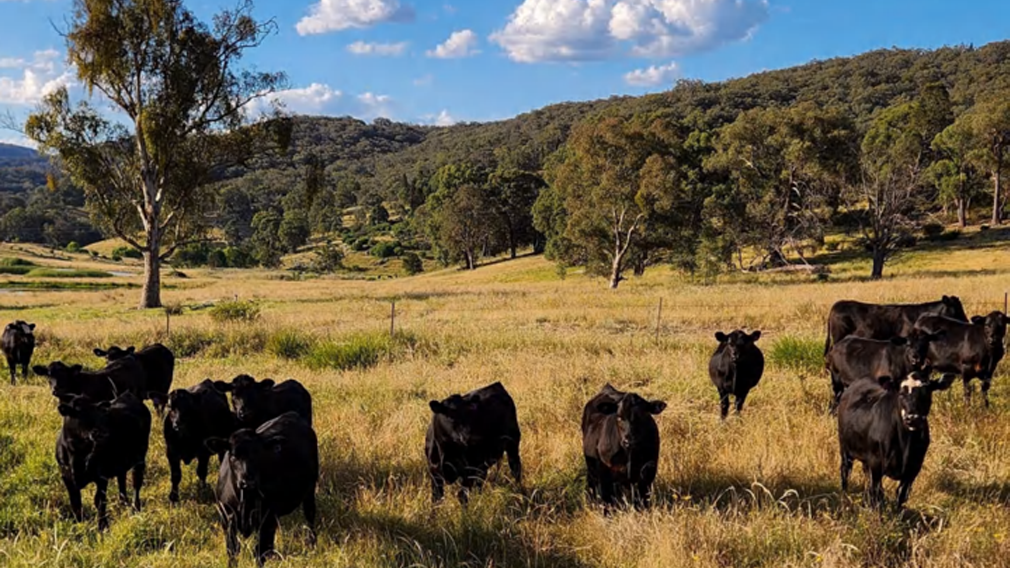
When Dr Lorraine Gordon took charge of her family farm in the mid-1980s, she faced challenges she describes as “next level”.
The rundown, overgrazed 3000-hectare beef property in Ebor in the New England Tablelands of NSW was unfenced, so her cattle ran free in the adjoining state forest. Having just graduated from agricultural college, she considered replicating the traditional approach of neighbouring farms but says the threat of failure served as a wake-up call.
“I realised that trying to keep up with the neighbours who'd been on improved properties for generations was going to be near impossible without going broke,” says Gordon, who is also Principal, Natural Capital Australia with leading carbon farming and natural capital company, Climate Friendly.
“The concept of holistic farming had just hit the country, and I began a long journey of continuous monitoring, evaluating, reporting and improving, adapting and adjusting my practices, moving firstly into holistic grazing and later adopting regenerative agriculture principles and practices.
“I realised that there was a different way to farm that's more resilient, more sustainable and ultimately more profitable, because it takes out those lumps and bumps that climate and markets can throw at you.”
Expectations at the farm gate
Gordon’s experience serves as a case study in how land-management action can strengthen business resilience. Producers face rising physical risks such as extreme weather events and droughts that directly affect productivity, land value and long‑term resilience.
Australian Bureau of Agricultural and Resource Economics and Sciences (ABARES) modelling highlights the financial impact that changing seasonal conditions can have on broadacre farming businesses, estimating that conditions from 2001 to 2023 reduced average annual farm profits relative to the previous 50 years. This reinforces the importance of the steps farmers are already taking to adapt to variable conditions, maintain productivity and build resilience over the long term.
Evolving expectations from food companies, global buyers and investors are also flowing through agricultural value chains and increasing interest in how businesses manage and communicate matters such as water security, greenhouse gas (GHG) emissions, land management and deforestation risk.
Joshua Finfer, Senior Manager, Climate and Nature at Westpac says requirements vary by market and commodity.
“The European Union’s deforestation regulation is one example of changing international market requirements. For certain commodities entering the EU, businesses may need to provide information demonstrating that products meet the regulation’s requirements,” he says.
“While the application will differ between businesses and markets, these developments are contributing to broader discussions across agricultural supply chains about data, traceability and land management.”
Gordon also points to changing expectations in local markets. “Corporates, including livestock processors in Australia, need to report on their sustainability actions globally to meet their requirements. One way to do that is to push those expectations up and down the supply chain, including straight into the laps of farmers to demonstrate their land stewardship and production credibility,” she says.
“Farms that can demonstrate how they manage environmental risks and opportunities may be well positioned to respond to evolving market expectations.
“But it’s not just access to certain markets and potential premiums,” adds Gordon. “A whole range of potential benefits may flow through, depending on the business and market, including opportunities to demonstrate environmental outcomes to customers, supply chain partners and finance providers.
“On our farm, we have a very clean, grass-fed quality beef product, farmed sustainably, and, in our experience, that has supported a premium price. It's a win-win. However, you need qualified evidence to demonstrate this, hence why we undertook natural capital assessment on our farm. Not only to demonstrate that we can farm sustainably, but to measure the health of our landscape and make improvements, which ultimately also increased our productivity.”
Putting regeneration to work
Across Australia, farmers are adopting practical approaches that strengthen resilience and demonstrate strong management of climate and nature risks. Improving soil health, ground cover and vegetation management can reduce erosion, support water security and enhance biodiversity, while helping farm productivity.
Practices such as rotational grazing, diversified rotations and improved pasture management can also strengthen land condition and improve resilience to climate variability. Improving irrigation efficiency, timing and runoff control can reduce exposure to water scarcity. Gordon’s farm finishes (the final stage of raising cattle) 800 to 1,000 steers per annum. One of her first steps toward regenerative agriculture was to use her cattle to benefit the environment.
“Initially, we put in electric fencing to create smaller paddocks and moved the cattle through the landscape as one mob,” she explains. “That wasn't without its challenges for us, because we get a lot of big storms, so the concept was often a short-term fix. Over the years we have replaced them with permanent fencing.
“There’s a beautiful symbiotic relationship between hoofed animals and pastures. Managed holistically, those mouths and hooves can improve the quality of pasture.”
In Gordon’s experience, cattle stir up ground like a plough as they move, encouraging seeds to germinate. The way they chomp grass also speeds up photosynthesis. “And if you're speeding up photosynthesis, you're sequestering carbon,” she says.
Higher soil carbon can indicate healthier more fertile soil that can better support pastures and therefore productivity. “We do extensive soil testing and correct any soil deficiencies with minerals.”
When Gordon completed T1 soil testing, which is the first sampling round to measure soil organic carbon levels after starting an official carbon project, there was already an average of 10 per cent soil carbon. “While we can pat ourselves on the back for that, I’m trying to shift it higher, which will be an interesting experiment,” she says.
Continuous improvements
Gordon does not use chemical fertilisers like superphosphate or urea and avoids all artificial fertilisers. “And, as we use the cattle to improve the pasture, it also brings in improved grasses, so you get more biodiversity,” she says.
While a changing climate poses challenges for Gordon, she says regenerative practices have “evened out the troughs and the highs”.
“In terms of kilos of beef, neighbours on highly improved, latest rye-grass paddocks might do two-and-a-half kilos a day in a good season in the growing months,” she says. “We might only be doing two kilos a day, but we're consistent. If things get tough through drought, because we have a mixture of native and improved pasture species, the natives will hang on, whereas the improved species bowl over very quickly as they're not indigenous to Australia and therefore not resilient to dry conditions.”
Gordon also practises time-control grazing/holistic grazing, a rotational farming method that moves a large group of livestock through a small paddock for a short time before moving them to fresh pastures. “It’s all about managing stock density while balancing the needs of your environment,” she says.
“This gives the grazed pasture time to rest and recover,” she says. “We started with quite an overgrazed property. I've got comparison photos over the years that show a very distinct change.
“It’s an ongoing process, but the great thing about natural capital assessments is that they’re retrospective – if people have already been doing this work, measuring natural capital can help demonstrate what is already happening on farm,” adds Gordon.
“But there's always room for improvement, and that's the fun part of the journey. There is a direct correlation with regenerating landscapes and increasing profitability.”
Measuring natural capital
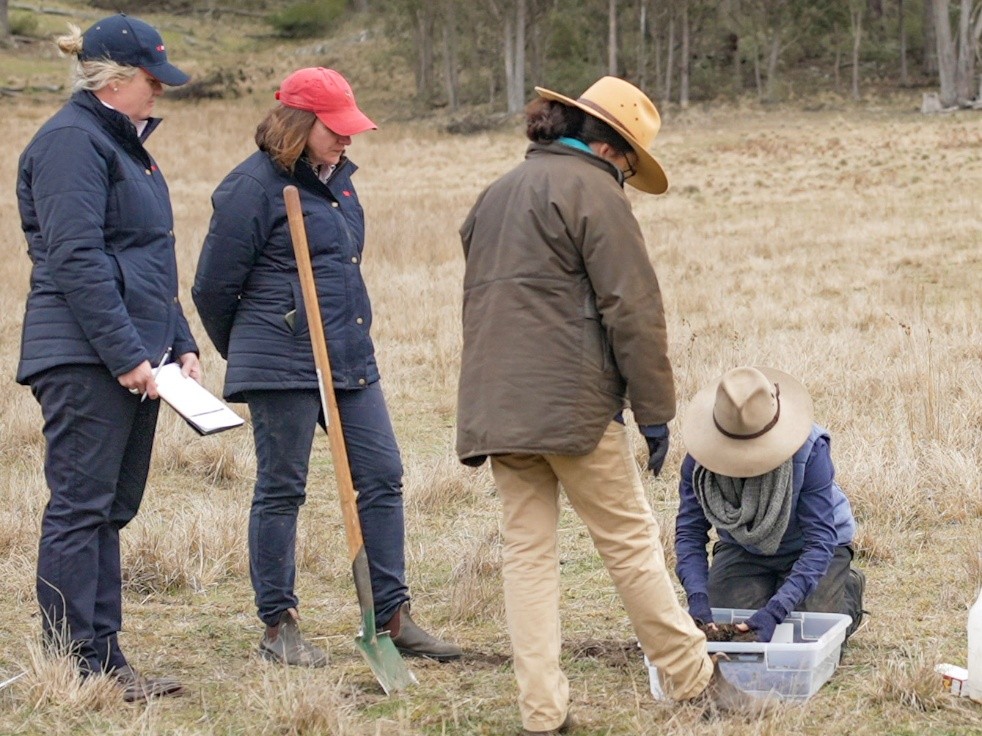
Rachel Kerlin, Sector Lead Agribusiness, Sustainability at Westpac, is seeing more farmers adopting practical land management approaches that strengthen resilience.
“There has always been a strong focus on improving productivity and efficiency on farms, but we’re also seeing growing recognition of the role that healthy soils, vegetation and natural assets play in supporting long-term farm performance,” she says.
Westpac and Climate Friendly are currently collaborating on a pilot program to explore scalable and consistent approaches to measuring natural capital on farm.
“When we talk about the health of natural capital, we're measuring the health of trees and shrubs, pastures, soil, wildlife and watercourses – all the greatest assets we have on this planet to be able to survive,” adds Gordon.
“The pilot aims to improve understanding of natural capital outcomes and explore practical ways to measure and monitor them over time,” says Kerlin.
“Australian farmers have always adapted to changing conditions and many are looking at how land management practices can support resilience alongside productivity.
“We work closely with our customers through local relationship teams and are committed to supporting them with information, insights and banking services as they make decisions for the long-term resilience and productivity of their business.”
Gordon explains the pilot program includes the development of an approach for assessing and measuring natural capital in an Australian agricultural context that aligns with international frameworks and standards.
“For farmers, being able to know the state of play of their own environment or farm health matters. They're being measured against what's possible for their particular bioregion, and there's a whole range of management activities they can then take to improve their own natural capital and their overall productivity and profitability.”
“I think the farmers' role in this is understated and, given that almost 60 per cent of the country is under some form of land management, it's a pretty important role we play in the overall scheme of things.”
For further information about the topics discussed in this article, please contact a Specialist Agribusiness Banker or Sustainability Specialist.
Stay informed with Westpac IQ
Get the latest reports straight to your inbox.
Related articles

Browse topics
Disclaimer
©2026 Westpac Banking Corporation ABN 33 007 457 141 (including where acting under any of its Westpac, St George, Bank of Melbourne or BankSA brands, collectively, “Westpac”). References to the “Westpac Group” are to Westpac and its subsidiaries and includes the directors, employees and representatives of Westpac and its subsidiaries.
Things you should know
We respect your privacy: You can view the New Zealand Privacy Policy here, or the Australian Group Privacy Statement here. Each time someone visits our site, data is captured so that we can accurately evaluate the quality of our content and make improvements for you. We may at times use technology to capture data about you to help us to better understand you and your needs, including potentially for the purposes of assessing your individual reading habits and interests to allow us to provide suggestions regarding other reading material which may be suitable for you.
This information, unless specifically indicated otherwise, is under copyright of the Westpac Group. None of the material, nor its contents, nor any copy of it, may be altered in any way, transmitted to, copied of distributed to any other party without the prior written permission of the Westpac Group.
Disclaimer
This information has been prepared by Westpac and is intended for information purposes only. It is not intended to reflect any recommendation or financial advice and investment decisions should not be based on it. This information does not constitute an offer, a solicitation of an offer, or an inducement to subscribe for, purchase or sell any financial instrument or to enter into a legally binding contract. To the extent that this information contains any general advice, it has been prepared without taking into account your objectives, financial situation or needs and before acting on it you should consider the appropriateness of the advice. Certain types of transactions, including those involving futures, options and high yield securities give rise to substantial risk and are not suitable for all investors. We recommend that you seek your own independent legal or financial advice before proceeding with any investment decision.
This information may contain material provided by third parties. While such material is published with the necessary permission none of Westpac or its related entities accepts any responsibility for the accuracy or completeness of any such material. Although we have made every effort to ensure this information is free from error, none of Westpac or its related entities warrants the accuracy, adequacy or completeness of this information, or otherwise endorses it in any way. Except where contrary to law, Westpac Group intend by this notice to exclude liability for this information. This information is subject to change without notice and none of Westpac or its related entities is under any obligation to update this information or correct any inaccuracy which may become apparent at a later date. This information may contain or incorporate by reference forward-looking statements. The words “believe”, “anticipate”, “expect”, “intend”, “plan”, “predict”, “continue”, “assume”, “positioned”, “may”, “will”, “should”, “shall”, “risk” and other similar expressions that are predictions of or indicate future events and future trends identify forward-looking statements. These forward-looking statements include all matters that are not historical facts. Past performance is not a reliable indicator of future performance, nor are forecasts of future performance. Whilst every effort has been taken to ensure that the assumptions on which any forecasts are based are reasonable, the forecasts may be affected by incorrect assumptions or by known or unknown risks and uncertainties. The ultimate outcomes may differ substantially from any forecasts.
Conflicts of Interest: In the normal course of offering banking products and services to its clients, the Westpac Group may act in several capacities (including issuer, market maker, underwriter, distributor, swap counterparty and calculation agent) simultaneously with respect to a financial instrument, giving rise to potential conflicts of interest which may impact the performance of a financial instrument. The Westpac Group may at any time transact or hold a position (including hedging and trading positions) for its own account or the account of a client in any financial instrument which may impact the performance of that financial instrument.
Author(s) disclaimer and declaration: The author(s) confirms that (a) no part of his/her compensation was, is, or will be, directly or indirectly, related to any views or (if applicable) recommendations expressed in this material; (b) this material accurately reflects his/her personal views about the financial products, companies or issuers (if applicable) and is based on sources reasonably believed to be reliable and accurate; (c) to the best of the author’s knowledge, they are not in receipt of inside information and this material does not contain inside information; and (d) no other part of the Westpac Group has made any attempt to influence this material.
Further important information regarding sustainability-related content: This material may contain statements relating to environmental, social and governance (ESG) topics. These are subject to known and unknown risks, and there are significant uncertainties, limitations, risks and assumptions in the metrics, modelling, data, scenarios, reporting and analysis on which the statements rely. In particular, these areas are rapidly evolving and maturing, and there are variations in approaches and common standards and practice, as well as uncertainty around future related policy and legislation. Some material may include information derived from publicly available sources that have not been independently verified. No representation or warranty is made as to the accuracy, completeness or reliability of the information. There is a risk that the analysis, estimates, judgements, assumptions, views, models, scenarios or projections used may turn out to be incorrect. These risks may cause actual outcomes to differ materially from those expressed or implied. The ESG-related statements in this material do not constitute advice, nor are they guarantees or predictions of future performance, and Westpac gives no representation, warranty or assurance (including as to the quality, accuracy or completeness of the statements). You should seek your own independent advice.
Additional country disclosures:
Australia: Westpac holds an Australian Financial Services Licence (No. 233714). You can access Westpac’s Financial Services Guide here or request a copy from your Westpac point of contact. To the extent that this information contains any general advice, it has been prepared without taking into account your objectives, financial situation or needs and before acting on it you should consider the appropriateness of the advice.
New Zealand: In New Zealand, Westpac Institutional Bank refers to the brand under which products and services are provided by either Westpac (NZ division) or Westpac New Zealand Limited (company number 1763882), the New Zealand incorporated subsidiary of Westpac ("WNZL"). Any product or service made available by WNZL does not represent an offer from Westpac or any of its subsidiaries (other than WNZL). Neither Westpac nor its other subsidiaries guarantee or otherwise support the performance of WNZL in respect of any such product. WNZL is not an authorised deposit-taking institution for the purposes of Australian prudential standards. The current disclosure statements for the New Zealand branch of Westpac and WNZL can be obtained at the internet address www.westpac.co.nz.
Singapore: This material has been prepared and issued for distribution in Singapore to institutional investors, accredited investors and expert investors (as defined in the applicable Singapore laws and regulations) only. Recipients of this material in Singapore should contact Westpac Singapore Branch in respect of any matters arising from, or in connection with, this material. Westpac Singapore Branch holds a wholesale banking licence and is subject to supervision by the Monetary Authority of Singapore.
Fiji: Unless otherwise specified, the products and services for Westpac Fiji are available from www.westpac.com.fj © Westpac Banking Corporation ABN 33 007 457 141. This information does not take your personal circumstances into account and before acting on it you should consider the appropriateness of the information for your financial situation. Westpac Banking Corporation ABN 33 007 457 141 is incorporated in NSW Australia and registered as a branch in Fiji. The liability of its members is limited.
Papua New Guinea: Unless otherwise specified, the products and services for Westpac PNG are available from www.westpac.com.pg © Westpac Banking Corporation ABN 33 007 457 141. This information does not take your personal circumstances into account and before acting on it you should consider the appropriateness of the information for your financial situation. Westpac Banking Corporation ABN 33 007 457 141 is incorporated in NSW Australia. Westpac is represented in Papua New Guinea by Westpac Bank - PNG - Limited. The liability of its members is limited.
U.S.: Westpac operates in the United States of America as a federally licensed branch, regulated by the Office of the Comptroller of the Currency. Westpac is also registered with the US Commodity Futures Trading Commission (“CFTC”) as a Swap Dealer, but is neither registered as, or affiliated with, a Futures Commission Merchant registered with the US CFTC. The services and products referenced above are not insured by the Federal Deposit Insurance Corporation (“FDIC”). Westpac Capital Markets, LLC (‘WCM’), a wholly-owned subsidiary of Westpac, is a broker-dealer registered under the U.S. Securities Exchange Act of 1934 (‘the Exchange Act’) and member of the Financial Industry Regulatory Authority (‘FINRA’). In accordance with APRA's Prudential Standard 222 'Association with Related Entities', Westpac does not stand behind WCM other than as provided for in certain legal agreements between Westpac and WCM and obligations of WCM do not represent liabilities of Westpac.
This communication is provided for distribution to U.S. institutional investors in reliance on the exemption from registration provided by Rule 15a-6 under the Exchange Act and is not subject to all of the independence and disclosure standards applicable to debt research reports prepared for retail investors in the United States. WCM is the U.S. distributor of this communication and accepts responsibility for the contents of this communication. Transactions by U.S. customers of any securities referenced herein should be effected through WCM. All disclaimers set out with respect to Westpac apply equally to WCM. If you would like to speak to someone regarding any security mentioned herein, please contact WCM on +1 212 389 1269. Investing in any non-U.S. securities or related financial instruments mentioned in this communication may present certain risks. The securities of non-U.S. issuers may not be registered with, or be subject to the regulations of, the SEC in the United States. Information on such non-U.S. securities or related financial instruments may be limited. Non-U.S. companies may not be subject to audit and reporting standards and regulatory requirements comparable to those in effect in the United States. The value of any investment or income from any securities or related derivative instruments denominated in a currency other than U.S. dollars is subject to exchange rate fluctuations that may have a positive or adverse effect on the value of or income from such securities or related derivative instruments.
The author of this communication is employed by Westpac and is not registered or qualified as a research analyst, representative, or associated person of WCM or any other U.S. broker-dealer under the rules of FINRA, any other U.S. self-regulatory organisation, or the laws, rules or regulations of any State. Unless otherwise specifically stated, the views expressed herein are solely those of the author and may differ from the information, views or analysis expressed by Westpac and/or its affiliates.
UK: The London branch of Westpac is authorised in the United Kingdom by the Prudential Regulation Authority (PRA) and is subject to regulation by the Financial Conduct Authority (FCA) and limited regulation by the PRA (Financial Services Register number: 124586). The London branch of Westpac is registered at Companies House as a branch established in the United Kingdom (Branch No. BR000106). Details about the extent of the regulation of Westpac’s London branch by the PRA are available from us on request.
This communication is not being made to or distributed to, and must not be passed on to, the general public in the United Kingdom. Rather, this communication is being made only to and is directed at (a) those persons falling within the definition of Investment Professionals (set out in Article 19(5) of the Financial Services and Markets Act 2000 (Financial Promotion) Order 2005 (the “Order”)); (b) those persons falling within the definition of high net worth companies, unincorporated associations etc. (set out in Article 49(2)of the Order; (c) other persons to whom it may lawfully be communicated in accordance with the Order or (d) any persons to whom it may otherwise lawfully be made (all such persons together being referred to as “relevant persons”). Any person who is not a relevant person should not act or rely on this communication or any of its contents. In the same way, the information contained in this communication is intended for “eligible counterparties” and “professional clients” as defined by the rules of the Financial Conduct Authority and is not intended for “retail clients”. Westpac expressly prohibits you from passing on the information in this communication to any third party.
European Economic Area (“EEA”): This material may be distributed to you by either: (i) Westpac directly, or (ii) Westpac Europe GmbH (“WEG”) under a sub-licensing arrangement. WEG has not edited or otherwise modified the content of this material. WEG is authorised in Germany by the Federal Financial Supervision Authority (‘BaFin’) and subject to its regulation. WEG’s supervisory authorities are BaFin and the German Federal Bank (‘Deutsche Bundesbank’). WEG is registered with the commercial register (‘Handelsregister’) of the local court of Frankfurt am Main under registration number HRB 118483. In accordance with APRA’s Prudential Standard 222 ‘Association with Related Entities’, Westpac does not stand behind WEG other than as provided for in certain legal agreements (a risk transfer, sub-participation and collateral agreement) between Westpac and WEG and obligations of WEG do not represent liabilities of Westpac. Any product or service made available by WEG does not represent an offer from Westpac or any of its subsidiaries (other than WEG). All disclaimers set out with respect to Westpac apply equally to WEG.
This communication is not intended for distribution to, or use by any person or entity in any jurisdiction or country where such distribution or use would be contrary to local law or regulation.
This communication contains general commentary, research, and market colour. The communication does not constitute investment advice. The material may contain an ‘investment recommendation’ and/or ‘information recommending or suggesting an investment’, both as defined in Regulation (EU) No 596/2014 (including as applicable in the United Kingdom) (“MAR”). In accordance with the relevant provisions of MAR, reasonable care has been taken to ensure that the material has been objectively presented and that interests or conflicts of interest of the sender concerning the financial instruments to which that information relates have been disclosed.
Investment recommendations must be read alongside the specific disclosure which accompanies them and the general disclosure which can be found here. Such disclosure fulfils certain additional information requirements of MAR and associated delegated legislation and by accepting this communication you acknowledge that you are aware of the existence of such additional disclosure and its contents.
To the extent this communication comprises an investment recommendation it is classified as non-independent research. It has not been prepared in accordance with legal requirements designed to promote the independence of investment research and therefore constitutes a marketing communication. Further, this communication is not subject to any prohibition on dealing ahead of the dissemination of investment research.